Understanding AI Data Center Infrastructure
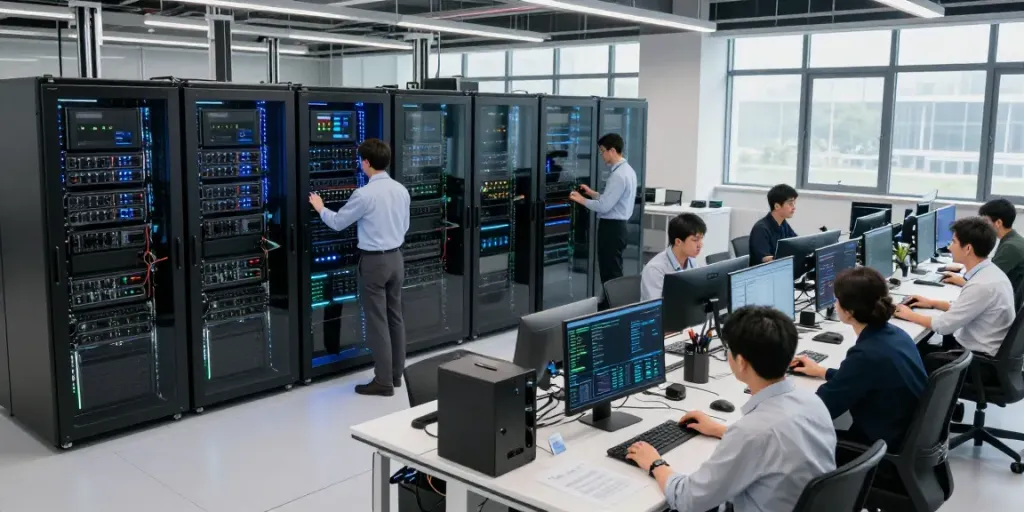
As we delve into the world of artificial intelligence, the significance of AI data center emerges as a critical factor in the efficient processing and delivery of AI services. These specialized facilities are designed to meet the specific computational and operational demands of AI applications, enabling the rapid training, deployment, and running of intricate algorithms that power modern intelligent solutions. In this comprehensive overview, we'll explore the core components of AI data centers, the importance of efficient power management, and how these elements come together to create a cohesive and powerful infrastructure.
What is an AI Data Center?
An AI data center is a facility that houses all the necessary elements for the storage, processing, and dissemination of data essential for artificial intelligence. Unlike traditional data centers that may support general IT operations, AI data centers are specifically engineered to manage high-density workloads associated with AI processes, such as machine learning and deep learning. This specialization helps organizations to efficiently handle vast amounts of information while also ensuring optimal performance for demanding AI tasks.
Key Components of AI Data Centers
The architecture of an AI data center is distinct and tailored to meet the unique requirements of AI workloads. The key components include:
- High-Performance Computing (HPC) Systems: These systems often consist of powerful Graphics Processing Units (GPUs) and Tensor Processing Units (TPUs) that are specifically optimized for AI computations.
- Massive Storage Solutions: AI applications require substantial data storage capabilities, often using high-speed solid-state drives (SSDs) to ensure rapid access to data.
- Advanced Networking Infrastructure: Efficient data transfer between processing units is crucial, necessitating high-bandwidth, low-latency networking solutions that can handle significant data throughput.
- Energy Management Systems: Given the high power demands of AI computing, effective energy management systems are implemented to monitor and optimize power usage, reducing operational costs and supporting sustainability efforts.
Importance of Efficient Power Management
Efficient power management is not just a necessity but a cornerstone of AI data center operations. With AI workloads generating high energy consumption, managing these resources effectively can lead to significant savings and increased operational efficiency. By utilizing advanced energy monitoring technologies and predictive analytics, organizations can enhance their energy profiles, reduce waste, and adapt to fluctuating demand. This is especially important as the demand for AI services continues to escalate globally.
Participating in the AI Token Economy
The AI Token Economy offers a fascinating framework where individuals and organizations can contribute to and benefit from the AI data center ecosystem. By participating, you can directly impact the efficiency and capabilities of AI infrastructure, creating a symbiotic relationship between power management and data processing capabilities.
How AI Data Centers Power the Token Economy
AI data centers play a crucial role in powering the AI Token Economy by providing the requisite infrastructure to process AI tokens—units of measure for AI model usage akin to how kilowatt-hours measure power consumption. Every interaction with an AI system translates into input and output tokens, which are processed within these data centers, driving the token economy forward.
Your Role in Contributing to AI Infrastructure
Participating in the AI Token Economy allows you to play an active role in shaping the future of AI infrastructure. By understanding how your contributions of resources, whether through funding or physical infrastructure, can lead to enhanced AI capabilities, you become an integral part of this evolving ecosystem. This collaborative approach ensures that all participants can reap the benefits from advancements in AI technologies.
Benefits of Joining the AI Token Economy
- Access to Cutting-edge Technology: Participants gain insights into the latest developments in AI infrastructure and can leverage these advancements in their operations.
- Financial Rewards: As demand for AI services grows, so too does the potential for financial returns through contribution-based rewards.
- Networking Opportunities: Engaging with other stakeholders in the AI sector can open doors for partnerships and collaborations.
- Sustainability Impact: Contributing to AI data centers with efficient energy management supports broader sustainability goals, promoting greener technology solutions.
Choosing the Right Power Plan
When considering participation in the AI Token Economy, selecting the appropriate power plan is essential. Understanding the types of AI Infrastructure Power Plans available can help you align your contributions with your operational needs and goals.
Types of AI Infrastructure Power Plans
AI infrastructure offers various power plans designed to cater to different participant needs. These plans typically range in levels of service, commitment duration, and operational capacity, providing flexible options for individuals and businesses alike:
- Core Power Access: Ideal for newcomers, offering basic support for AI workloads.
- Enhanced Power Access: A mid-tier option that allows for increased operational capacity and flexibility.
- Advanced Power Access: Tailored for organizations with substantial needs, providing extensive resources and support.
- Professional Power Scale: Focused on businesses seeking to scale operations significantly within the AI landscape.
- High Power Efficiency: Plans that optimize power consumption while maximizing output.
- Enterprise Power Systems: Designed for large-scale enterprises that require robust and reliable power solutions.
Calculating Your Contribution Rewards
Calculating your rewards from participation in the AI Token Economy is typically based on your recorded contributions and the operational performance of AI workloads powered by your plan. The reward system is designed transparently, allowing participants to understand how their contributions translate into tangible benefits.
Evaluating Your Participation Needs
Before committing to a power plan, consider your specific participation needs. Evaluating factors such as operational capacity, expected power usage, and your organization’s long-term AI goals will help ensure that you choose the plan that best aligns with your objectives.
Challenges in AI Data Center Management
While AI data centers provide incredible capabilities, they also come with their share of challenges. Understanding these challenges is essential for anyone involved in managing or investing in AI infrastructure.
Common Misconceptions About AI Data Centers
One of the most prevalent misconceptions is that AI data centers function similarly to traditional data centers. In reality, the specific needs of AI—such as high-density computation and large storage capacity—require tailored solutions. Additionally, there is often confusion around the cost implications of running AI data centers versus traditional IT facilities.
Addressing Infrastructure Scalability Issues
AI workloads are growing in complexity and size, necessitating infrastructure that can quickly scale to meet demand. Addressing scalability issues involves not only investing in robust hardware but also ensuring that power and cooling systems are capable of handling increased workloads effectively. Strategic planning and forecasting are crucial for effective scalability management.
Managing Environmental Impact and Sustainability
The environmental impact of AI data centers is a growing concern. As they consume vast amounts of power, sustainability practices must be integrated into their operations. This includes utilizing renewable energy sources, efficient cooling systems, and waste reduction practices to mitigate the overall carbon footprint.
The Future of AI Data Centers
The landscape of AI data centers is continually evolving, influenced by advancements in technology, changes in market demand, and growing environmental considerations. Preparing for the future involves staying informed about emerging trends and innovations.
Emerging Trends in AI Infrastructure Technology
Several key trends are shaping the future of AI infrastructure:
- Increased Adoption of Edge Computing: As AI applications grow, processing data closer to the source minimizes latency and enhances performance.
- Integration of Advanced Cooling Techniques: Innovative cooling methods are being developed to manage the thermal output of high-density GPU clusters.
- Focus on Quantum Computing: While still in its infancy, quantum computing holds the potential to revolutionize AI data processing capabilities.
- Development of Autonomous Data Centers: AI-driven automation is expected to streamline operations within data centers, improving efficiency and reducing human intervention.
Preparing for the 2026 AI Landscape
Looking ahead to 2026, the demand for AI capabilities is set to surge. Organizations must prepare by investing in scalable infrastructure, adopting sustainable practices, and leveraging emerging technologies. By understanding the dynamics of the AI Token Economy, they can position themselves for enhanced participation and growth.
Expert Predictions for AI Data Center Growth
Industry experts anticipate significant growth in the AI data center sector, driven by increased investment in AI technologies and a greater reliance on data analytics across various industries. This growth will lead to expanded infrastructure and a more interconnected ecosystem that fosters innovation and participation within the AI Token Economy.
What are the main functions of an AI data center?
AI data centers primarily serve to store, process, and manage the vast amounts of data needed for AI applications, facilitating efficient machine learning and deep learning operations.
How does power allocation impact AI data processing?
Power allocation directly affects the performance and efficiency of AI data processing. Properly managed power resources ensure that AI workloads are executed smoothly, minimizing downtime and optimizing output.
Who can benefit from participating in the AI token economy?
Organizations, entrepreneurs, and individuals interested in AI technology can benefit from participating in the AI token economy, as it provides opportunities for collaboration, financial rewards, and access to cutting-edge innovations.
What are the key features of a sustainable AI data center?
Key features of a sustainable AI data center include energy efficiency, utilization of renewable energy sources, advanced cooling systems, and infrastructure designed to minimize environmental impact.
How are AI data centers evolving in 2026?
In 2026, AI data centers are expected to evolve through increased automation, integration of edge computing solutions, and advancements in quantum computing, leading to more efficient operations and greater scalability.